The Divine Mind by Michael Gellert
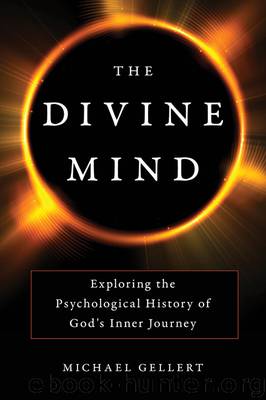
Author:Michael Gellert
Language: eng
Format: epub
ISBN: 9781633883185
Publisher: Prometheus Books
Published: 2017-11-30T05:00:00+00:00
The Kabbalists interpreted the Bible in the mystical light of Ein Sof by creatively teasing out what they believed were its references to it. For example, Deuteronomy 7:21 states that “the Lord your God is in your midst”; one Kabbalist explained “in your midst” as an allusion not only to the people or social environment—the standard and obvious interpretation—but to the individual or their inner psyche.9 There resides the spark of Ein Sof. Such clever reinterpretations of the Bible may also be found in that masterpiece of Kabbalistic literature, the Zohar, or Book of Splendor (also known as the Book of Radiance), of which we spoke earlier. In that instance the Zohar concluded that humankind threw God out of paradise rather than the other way around, a reinterpretation of the Genesis story that we may now further explore in a mystical context. Evidently, the paradise God was exiled from was his consciousness of nothingness, of his true condition as Ein Sof. The world he was exiled into, together with Adam and Eve, was by contrast the consciousness of only somethingness and of opposites like good and evil.10 This suggests that God forgot his vital essence of nothingness and the primordial feminine wisdom that kept him connected to it. Then with the Kabbalists, and with the Christian and Islamic mystics, too, he fully remembered it and returned to his roots. Naturally, I am speaking here in the same language of myth used by the Genesis story or the Zohar. More psychologically, we could say that God's discovery of his essential nature of nothingness symbolizes or parallels our discovery of our own.
Another example of the Zohar's interpretive agility is its rendition of Job 28:12, usually translated as, “But where shall wisdom be found? and where is the place of understanding?”11 Because the Hebrew word ayin can mean both “nothingness” and “where,” the Zohar translates this as “wisdom emerges from nothingness.”12 (The question mark is also a matter of interpretation since, again, ancient Hebrew has no punctuation.) A canonical or sacred text written most likely in the thirteenth century by the Spanish rabbi Moses de Leon, the Zohar stands in importance side by side with the Bible and the Talmud. In addition to being a commentary on the Bible's hidden meanings, it ventures into a host of mystical subjects, including reincarnation, visionary experiences, and the influence of otherworldly forces. The folkloric notion of the golem, a prehuman, mindless man made of inanimate matter and supposedly brought to life by virtue of the mystic's ecstasy, is also a magical element in Kabbalistic thinking. (An analog to this in Tibetan Buddhism is known as the tulpa, a thought-form brought to life.)
The Kabbalah has no single classical text on how we can awaken to the absolute nothingness within and all around us. There's no standard manual for this, such as St. John of the Cross's Ascent of Mount Carmel (in Christianity), Taoism's Secret of the Golden Flower, Zen Buddhism's Mumonkan, or the Tibetan Book of the Great Liberation.
Download
This site does not store any files on its server. We only index and link to content provided by other sites. Please contact the content providers to delete copyright contents if any and email us, we'll remove relevant links or contents immediately.
The Lost Art of Listening by Michael P. Nichols(7547)
Why I Am Not A Calvinist by Dr. Peter S. Ruckman(4183)
The Rosicrucians by Christopher McIntosh(3543)
Wicca: a guide for the solitary practitioner by Scott Cunningham(3209)
Signature in the Cell: DNA and the Evidence for Intelligent Design by Stephen C. Meyer(3181)
Real Sex by Lauren F. Winner(3060)
The Holy Spirit by Billy Graham(2999)
To Light a Sacred Flame by Silver RavenWolf(2862)
The End of Faith by Sam Harris(2773)
The Gnostic Gospels by Pagels Elaine(2559)
Waking Up by Sam Harris(2494)
Jesus by Paul Johnson(2402)
Nine Parts of Desire by Geraldine Brooks(2397)
Devil, The by Almond Philip C(2363)
The God delusion by Richard Dawkins(2339)
Heavens on Earth by Michael Shermer(2309)
Kundalini by Gopi Krishna(2215)
Chosen by God by R. C. Sproul(2198)
The Nature of Consciousness by Rupert Spira(2135)
